
Renters Insurance
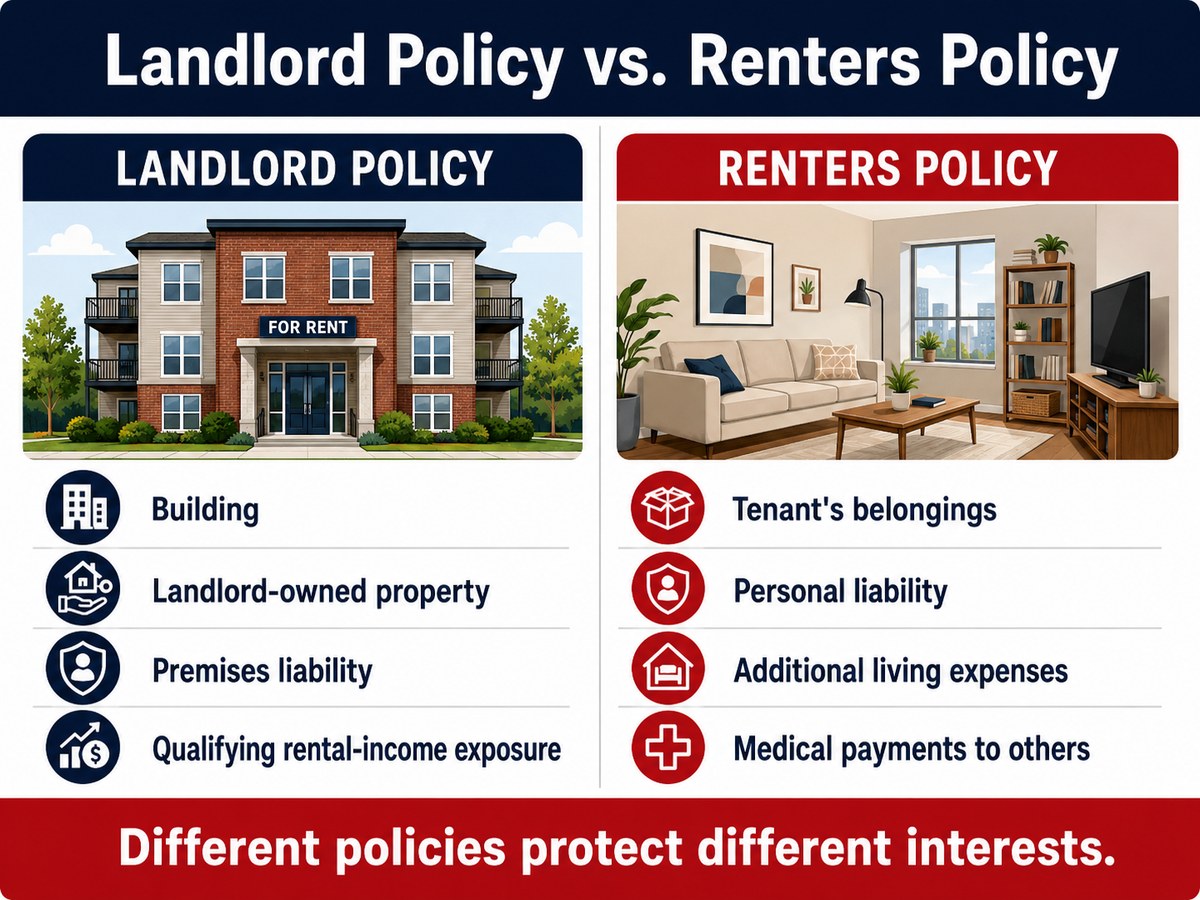
Your landlord's insurance generally protects the building — not your furniture, clothing, electronics, personal liability, or eligible additional living expenses. Renters insurance is designed to help protect the things that belong to you.

What Does a Renters Policy Protect?
Renters insurance is designed for individuals and families who rent their home, apartment, or room. It generally covers personal property and personal liability for the tenant — not the building or structure they rent. Renters insurance is a separate product from the landlord's property insurance and does not replace it.
Personal Property
May cover certain direct physical loss or damage to personal belongings — clothing, furniture, electronics, appliances, and similar items — from covered perils, subject to the policy's coverage form (named perils or open perils), applicable limits, sub-limits for certain item categories, exclusions, and deductible. High-value items are commonly subject to per-item sub-limits.
Personal Liability
May cover the tenant's covered legal liability for bodily injury or property damage to others arising from a qualifying incident — such as a guest injured in the rental unit or accidental damage the tenant causes to others' property — subject to policy terms, applicable limits, and exclusions. Intentional acts and business-related liability are commonly excluded.
Additional Living Expenses / Loss of Use
If a covered loss makes the rental unit temporarily uninhabitable, this coverage may help pay for certain additional living expenses while the unit is being repaired or while the tenant arranges an alternate residence, subject to policy terms, applicable limits, and the requirement that the displacement results from a covered loss. Not every forced displacement qualifies.
Medical Payments to Others
May pay for certain medical expenses for guests injured at the rental unit — regardless of fault — up to the policy's medical payments limit, subject to policy terms and eligibility. This coverage does not cover injuries to the insured tenant or other household members who reside in the unit.
Off-Premises Personal Property
Personal property coverage under a renters policy may extend to belongings outside the rental unit — such as items in a vehicle, storage unit, or while traveling — subject to the policy's terms, covered perils, and applicable sub-limits. Coverage away from the rental unit is often more limited than coverage inside it.
Your Landlord's Insurance Does Not Protect Everything You Own
Many renters assume their landlord's insurance policy covers their belongings if something goes wrong. It generally does not. A landlord's property insurance is designed to protect the building the landlord owns — not the tenant's personal property or personal liability. These are two separate policies protecting two separate interests.

How Would Your Belongings Be Valued After a Covered Loss?
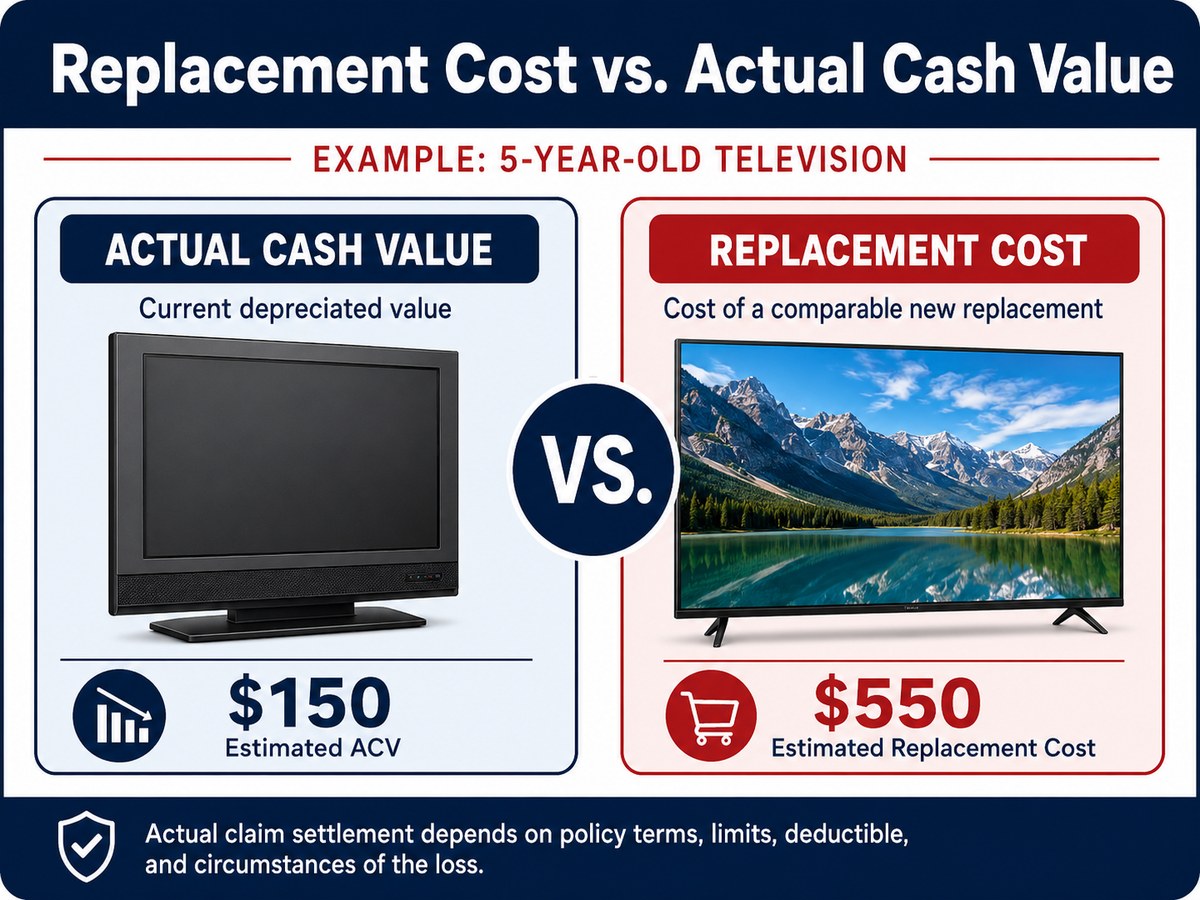
Renters policies may cover personal property on either a replacement-cost or actual-cash-value basis. Actual cash value (ACV) coverage pays the depreciated value of belongings at the time of loss — which can be significantly less than the cost to buy replacements. Replacement-cost coverage may pay to replace items with comparable new ones, subject to policy terms and applicable limits.
Replacement-cost policies typically carry higher premiums than ACV policies. Neither valuation method guarantees unlimited reimbursement — coverage remains subject to the policy's applicable limits, sub-limits, deductible, and the circumstances of the loss. Confirm which valuation method applies to any renters policy you are considering.

Are My Roommate's Belongings Covered Under My Policy?
Generally, no — not automatically. A renters policy typically covers the named insured and, in some cases, qualifying household members residing in the same unit, but the scope of coverage for additional residents varies by policy. Unrelated roommates who are not listed as named insureds or co-insureds on the policy should generally not be assumed to be covered. Individuals sharing a rental who are not qualifying household members typically need their own separate renters policy for their belongings and personal liability. Review the specific policy language or contact our team before assuming a roommate's belongings are covered.
Jewelry, Watches, Art, and Other High-Value Property
High-value items — jewelry, watches, fine art, musical instruments, cameras, and similar collectibles — are commonly subject to per-item or per-category sub-limits under a standard renters policy, regardless of the overall personal property limit. A scheduled personal property endorsement or floater may provide broader coverage for specifically listed items up to their scheduled value, often without a deductible and sometimes covering a wider range of perils. Items should generally be appraised and listed with the carrier at the time the endorsement is added. Ask our team whether scheduling is appropriate for your valuables.
What Renters Insurance Generally Does Not Cover
Exclusions vary by insurer, policy form, and state — review the actual policy form for your coverage.
- The building or structure itself: That is the landlord's responsibility to insure separately under a landlord or property policy
- Flood damage: Standard renters policies generally exclude flood damage. Separate flood coverage may be available through the National Flood Insurance Program (NFIP) or a private flood insurer
- Earthquake damage: Generally excluded from standard renters policies; a separate endorsement or policy may be available depending on the carrier and state
- Business activities: Losses arising from the tenant's business activities conducted from the rental are commonly excluded from a standard renters policy
- Normal wear and tear, gradual deterioration, mold, or pest damage — coverage varies significantly and is often limited or excluded
- An unrelated roommate's belongings, unless that roommate is listed as a named insured or co-insured
Renters Insurance FAQs
Does my landlord's insurance cover my belongings?
Generally, no. A landlord's property insurance is designed to protect the building the landlord owns — not the tenant's personal property or personal liability. If your belongings are damaged or stolen, or if you're liable for an incident in your rental unit, your landlord's policy generally will not respond. Renters insurance is a separate policy designed specifically to address those exposures.
Is renters insurance required by law?
Renters insurance is generally not required by state law in most circumstances, though your specific state or municipality may have its own requirements — confirm with our team if you have questions about your state. Separately, many landlords contractually require tenants to carry renters insurance as a condition of the lease. Review your lease agreement to determine whether your landlord requires coverage.
Does renters insurance cover my roommate's belongings?
Generally, no — not unless the roommate is listed on the policy as a named insured and the policy form permits it. Renters policies typically cover the named insured and certain qualifying household members, but roommates who are not qualifying household members generally need their own separate renters policy to cover their belongings and personal liability.
What is the difference between replacement cost and actual cash value?
Replacement cost coverage may pay to replace a covered item with a comparable new one — subject to policy terms and applicable limits — without deducting for depreciation. Actual cash value (ACV) coverage pays the depreciated value of the item at the time of loss, reflecting age, condition, and wear. For example, a five-year-old television may have an actual cash value well below its replacement cost. Replacement-cost policies typically carry higher premiums.
Does renters insurance cover personal belongings in my vehicle?
Some renters policies extend off-premises personal property coverage to belongings left in a vehicle, subject to the policy's terms, covered perils, applicable sub-limits, and exclusions. Personal items left in a vehicle are generally not covered by an auto insurance policy — auto coverage responds to the vehicle itself, not the contents. Whether a renters policy covers items stolen from or damaged in a vehicle depends on the specific policy form. Review your policy or contact our team before assuming this coverage applies.
How are high-value items like jewelry or art covered?
High-value items are commonly subject to per-item or per-category sub-limits under a standard renters policy, even if your overall personal property limit is higher. A scheduled personal property endorsement or floater may provide broader, itemized coverage for specifically listed valuables, subject to appraisal and the endorsement's own terms. Contact our team to discuss scheduling valuable items.
What states does Whitestone Insurance serve for renters insurance?
Whitestone Insurance Services LLC is licensed in New York, New Jersey, Connecticut, Pennsylvania, Ohio, Delaware, and South Carolina. Our ability to place renters coverage depends on the property location, risk details, carrier availability, and applicable state requirements. Contact us to confirm availability and discuss options for your state.
Ready to Review Your Renters Coverage?
Call us or start a quote request online. Our licensed agents provide personal guidance through the review process.